The Energy Bill That Made Me Think About AI Carbon
I was talking to an ML engineer at a startup last year and asked how much their model training costs. "About $2 million in compute," he said. Then he mentioned the energy bill was roughly a third of that. $600,000 in electricity for one training run. That's when I started thinking seriously about AI's carbon footprint.
AI systems consume massive energy. Training a large language model can use more electricity than an average household would in decades. GPT-3 training reportedly consumed about 1,287 MWh. Mid-sized clusters training for weeks can easily use hundreds of MWh. And that's just training—inference (actually running the model) adds up over time.
I built this calculator because I wanted to understand my own usage. Every experiment I run, every model I train, has a carbon cost. The question is whether that cost is worth it—and often, with some optimization, I can get similar results for significantly less emissions.
What Goes Into AI Carbon Calculations
The MLCO2 methodology (from the paper "Measuring the Carbon Intensity of AI in Cloud Instances") breaks AI carbon footprint into several components:
- Training energy: The electricity used to train the model, measured in MWh
- Hardware embodied carbon: The carbon emitted to manufacture the GPUs used for training, amortized across their lifetime
- Data center PUE: Power Usage Effectiveness. Data centers need cooling and infrastructure beyond the GPUs themselves. A PUE of 1.5 means for every watt going to compute, another 0.5 watts goes to cooling and overhead
- Grid carbon intensity: How much carbon is emitted per kWh depends on the region. A GPU running on Norwegian hydro is very different from one running on German coal
My calculator uses current data for grid carbon intensity by region and accounts for all these factors.
Practical Ways to Reduce Emissions
The biggest wins I've found in my own work:
Choose your region wisely.GPU clusters in regions with high renewable energy have much lower carbon intensity. Norway, Sweden, and Iceland are good choices. German or Polish grids are heavily coal-based. AWS and Google Cloud both let you choose region. It's not always cheaper to use the closest region.
Track experiments.I was surprised how much compute gets wasted on experiments that don't go anywhere. Implementing experiment tracking means you can identify and kill experiments that aren't converging before wasting a full training run.
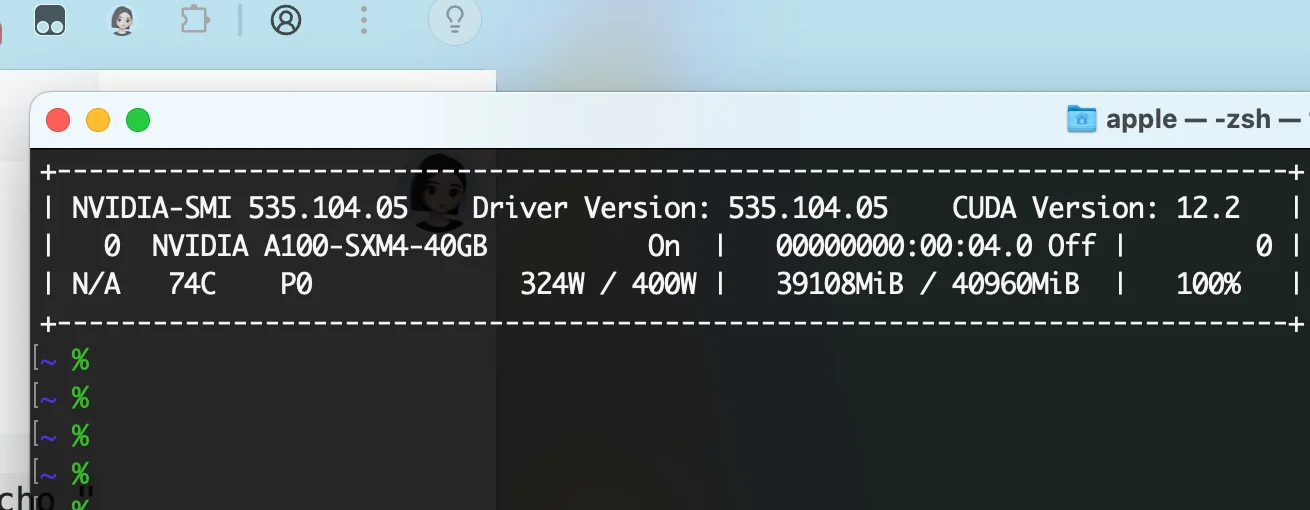
Use efficient hardware.Different GPUs have very different performance per watt. The H100 is significantly more efficient than the A100 for many workloads. If you're buying or renting compute, efficiency should factor into your decision.
Optimize models. Pruning, quantization, and knowledge distillation can produce smaller models that perform almost as well with much less inference cost. A quantized model might use 4x less memory and energy for similar accuracy.
Schedule training for green hours. Some grids have more renewables at certain times. If your training can be scheduled flexibly, shifting it to when renewables are abundant reduces carbon intensity.
How to Use This Calculator
Enter your hardware specs (GPU type, number of GPUs, hours trained), choose your region, and get an estimate of your carbon footprint. The calculator uses MLCO2 methodology with current grid data.
The numbers are estimates. Real-world carbon accounting is complex and depends on many factors this calculator can't know (actual grid mix at the moment of training, exact hardware utilization, cooling efficiency). But it's good enough to make informed decisions and identify major sources of emissions.
For a more detailed breakdown, the Carbon-AI project maintains more sophisticated calculators. This tool is meant for quick estimates during project planning.
Why It Matters
AI's carbon footprint is growing rapidly and getting attention from regulators and customers. The EU's AI Act includes transparency requirements around environmental impact. Some enterprise customers are starting to ask about carbon footprints for AI services they buy.
But honestly, the main reason I care is that compute costs money and carbon. Reducing one usually reduces the other. Optimizing for efficiency has made my work cheaper and cleaner at the same time. That's the kind of win that's worth pursuing.
Data centers now account for about 1-2% of global electricity consumption, and AI is driving significant growth in that number. The IEA projects that data center electricity use could double by 2030, largely driven by AI. Whether you're an individual developer or running a company's infrastructure, being conscious about compute use isn't just good for the environment—it's good for the bottom line.
Written by Bai Shuang, a full-stack engineer with 16 years of Java/JavaScript experience, 10 years of Scala, and 8 years specializing in privacy-focused tools.
GitHub: @oldbig. Open source project: redux-lite - A lightweight React state management solution.